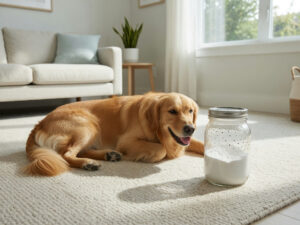
Baking soda cleans carpet by absorbing moisture and neutralising odour molecules — and for pet owners, it’s one of the safest, cheapest tools you can reach for. Sprinkle it on, leave it to work, vacuum it up. That’s the short version. Everything below fills in the rest.
If you share your home with a dog or cat, you already know that carpets take a beating. Muddy paws, pet hair, the occasional accident — it all adds up. The good news is that a box of baking soda sitting in your kitchen cupboard handles more of those messes than most people realise. It costs almost nothing, leaves no chemical residue, and won’t harm your pets. Here’s how to use it properly.
Why Does Baking Soda Work on Carpets?
Baking soda — chemically known as sodium bicarbonate — is a mild alkali. When it contacts acidic odour molecules (which is exactly what pet urine, sweat, and mildew are), it triggers a neutralisation reaction. The odour is chemically broken down rather than just covered over.
On top of that, baking soda is highly absorbent. Its fine crystalline structure draws moisture and the compounds dissolved in it up out of carpet fibres. This is why it works so well as a dry treatment — it pulls the problem out of the carpet and holds it until you vacuum it away.
Cleaning professionals have used sodium bicarbonate as a deodorising agent for decades because it’s effective, non-toxic, and safe on most surfaces. For pet owners, it ticks a critical extra box: it contains none of the harsh chemicals — chlorine, ammonia, or volatile organic compounds — that can irritate a dog’s or cat’s sensitive respiratory system. Research into household cleaning agents consistently places baking soda among the lowest-risk options for homes with animals.
What Do You Need Before You Start?
You won’t need a special shopping trip. Most of what you need is already in your home.
- Baking soda — a standard 500g box covers roughly one medium-sized room
- A vacuum cleaner with solid suction and a clean filter
- Clean white cloths or paper towels for blotting fresh stains
- Cold water in a spray bottle
- White vinegar (optional, but useful for stubborn stains and urine)
- A soft-bristled brush for working powder into deeper pile
- Rubber gloves if you’re dealing with biological stains
One important step before you begin: do a spot test in a hidden corner of your carpet. Baking soda is gentle, but carpet dyes vary — some react unexpectedly to any substance, even mild ones. A one-inch test patch takes ten minutes and rules out any surprises before you treat a visible area.
How to Clean Carpet With Baking Soda: Step by Step
Follow these steps in order. The active work takes about 20–30 minutes; results depend heavily on how long you allow the baking soda to sit.
- Vacuum the area first. Remove loose debris, pet hair, and surface dirt before applying anything. You want the baking soda working directly on carpet fibres, not sitting on top of a layer of hair and crumbs.
- Blot any fresh stains. If you’re dealing with a wet stain, blot (never rub) with a clean cloth to absorb as much liquid as possible. Work from the outer edge inward to avoid spreading.
- Sprinkle baking soda generously. Apply a visible, even layer over the target area. Use roughly 2–3 tablespoons per square foot for general deodorising; pile it thicker directly over a stain. Don’t be shy — you can always vacuum up extra.
- Work it into the fibres. Use a soft brush or gloved fingers to press the powder gently down into the pile. This is especially important for thick or shaggy carpets, where odour molecules settle deepest.
- Let it sit — properly. Minimum 15 minutes for freshening. For pet odours, aim for at least 1–2 hours. For serious or set-in smells, leave it overnight. Longer contact time means more absorption.
- Vacuum slowly and thoroughly. Use overlapping passes, then go over the area again in a perpendicular direction. Make sure your vacuum bag or canister isn’t already full — baking soda will kill suction fast if there’s no room.
- Inspect and repeat if needed. For deep-set stains or strong odours, one round may not be enough. Repeat before moving on to a wet method.
How Do You Use Baking Soda on Pet Urine Stains?
Pet urine is one of the toughest carpet challenges because it doesn’t just stain — it soaks deep into the backing and underlay, and the uric acid crystals that form as it dries continue producing odour long after the visible stain has gone.
Baking soda is most effective on fresh urine because it absorbs the liquid before those crystals have a chance to form. Catch the accident quickly, blot up as much as possible with a towel, then pack the area with baking soda and leave it for at least 2–3 hours. The powder will often visibly change colour as it draws the urine out of the carpet.
For older, dried urine stains, rehydrate the area lightly with cold water first, then apply the baking soda. This gives the powder something to absorb. If the smell persists after two applications, uric acid crystals may still be present in the underlay — baking soda deodorises but cannot dissolve uric acid on its own. The complete guide to removing dog pee from carpet covers the full range of options for every stage of a urine stain, including what to do when surface treatments aren’t reaching deep enough.

How Does the Baking Soda and Vinegar Method Work?
You’ve probably seen this combination recommended widely. It does work — but the order matters, and many people get it backwards.
- Blot up any fresh liquid from the stain until the cloth comes away nearly dry.
- Sprinkle a generous layer of baking soda over the stain and leave it 10–15 minutes.
- Mix equal parts white vinegar and cold water in a spray bottle.
- Spray the vinegar solution over the baking soda — it will fizz immediately.
- Let the reaction bubble for 5 minutes, then blot the foam away with a clean cloth.
- Allow the area to dry completely, then vacuum any remaining residue.
The fizzing action helps lift stain particles out of fibres mechanically, while the vinegar’s mild acidity tackles odour-causing bacteria. White vinegar also neutralises pet odours on its own — so the combination works on two fronts at once.
One important caveat: don’t use this method on wool carpets. Wool is protein-based and vinegar can weaken the fibres with repeated use. If you have a wool carpet affected by a pet accident, the technique for cleaning stains from a wool carpet is quite different and worth reading before you apply anything.
If you’d like to build a broader natural cleaning toolkit, there are five proven DIY pet carpet cleaning recipes worth trying alongside a baking soda routine — several work particularly well as a pre-treatment before you apply the powder.
How Long Should You Leave Baking Soda on Carpet?
This is probably the most common question — and the answer depends on what you’re trying to fix.
- General freshening: 15–30 minutes
- Light pet odours: 1–2 hours
- Strong or persistent smells: 3–8 hours
- Set-in stains with deep odour: overnight (8–12 hours)
There’s no real downside to leaving it longer. Baking soda won’t bleach your carpet or damage fibres with extended contact. The main practical concern is foot traffic — it becomes a slipping hazard on nearby hard flooring, and if people walk through the treated area it gets trodden deeper into the pile.
If you’re leaving baking soda overnight, close the room off from pets. While it’s non-toxic, you don’t want a curious dog licking it up in quantity, and you definitely don’t want paw prints tracking white powder through the rest of the house before you’ve had a chance to vacuum.
Is Baking Soda Safe for Pets?
Yes — with a few sensible precautions. Baking soda is non-toxic to dogs and cats at the quantities they’d encounter during carpet cleaning. It’s actually a common ingredient in commercial pet-safe cleaning products precisely because it contains none of the chlorine, ammonia, or harsh solvents that can irritate animal airways and skin.
The precautions are practical rather than chemical:
- Dogs may eat the powder — not dangerous in small amounts, but unnecessary and potentially upsetting to their digestion in larger quantities
- Cats may roll in it and then groom it off their coats — again, fine in small amounts, but avoidable
- Very fine powder can mildly irritate nasal passages if sniffed repeatedly at close range
Once you’ve vacuumed and the carpet is dry, it’s completely safe for pets to return. If you’re generally cautious about what goes onto your floors around animals, the guide to non-toxic carpet cleaning methods for pet owners is a thorough resource for building a safer cleaning routine from the ground up.
Can You Use Baking Soda to Deodorise an Entire Room?
Absolutely — and this is one of baking soda’s best uses. If your carpet has a general background “pet smell” rather than a specific stain, a whole-room treatment is the most effective approach.
- Vacuum the room thoroughly to lift pet hair and surface debris.
- Use a sieve or flour sifter to distribute baking soda evenly across the entire carpet. A sieve gives a more even coverage and prevents clumping.
- Leave it for 2–4 hours minimum — overnight for strong odours.
- Vacuum slowly and methodically with overlapping passes. Expect to empty or replace the bag mid-way through a large room.
Many pet owners do this as a monthly maintenance routine. A 500g box costs under £1 in most supermarkets, and regular treatments prevent that gradual background smell from building up to the point where visitors notice it the moment they step inside.
What Mistakes Should You Avoid?
A handful of common errors reduce how effective baking soda is — or actively make the problem worse.
- Rubbing instead of blotting. Rubbing pushes a wet stain deeper into fibres and spreads it outward. Always blot, lifting the cloth straight up rather than scrubbing sideways.
- Skipping the initial vacuum. Applying baking soda to a hair-covered carpet means the powder does most of its work on the hair, not the fibres underneath. Vacuum first, always.
- Using too little. A thin dusting absorbs very little. Be generous — a visible layer, not a light dusting.
- Not leaving it long enough. Many people sprinkle and vacuum within a few minutes. Five minutes is barely enough time for meaningful absorption. Minimum 15, ideally longer.
- Using hot water on urine stains. Heat permanently sets protein-based stains into carpet fibres. Always use cold water on pet urine.
- Expecting it to lift heavy pigmented stains. Baking soda is a deodoriser and moisture absorber, not a traditional stain remover. Red wine, dark pet food, and similar stains need a dedicated stain treatment as well.
- Forgetting to clean the vacuum filter afterwards. Fine baking soda powder clogs filters quickly. Clean or replace yours after every baking soda clean to maintain suction performance.
When Is Baking Soda Not Enough?
Baking soda has real limits — and knowing them saves you time and frustration.
If urine has soaked through the carpet backing into the underlay, no topical treatment will fully reach it. In those situations, you need a product that penetrates deeply — typically an enzymatic cleaner — or in severe cases, professional hot-water extraction cleaning.
For faecal stains, baking soda helps with odour control after you’ve removed the solid matter, but you’ll need a disinfecting step as well. Bacteria present in faeces can survive in carpet fibres and cause health problems for both pets and people.
If your pet is returning repeatedly to the same spot on the carpet, baking soda alone won’t break the cycle. Animals can detect uric acid residues at concentrations far below what a human nose can sense, and that scent signal keeps drawing them back. An enzymatic cleaner breaks down those crystals completely, removing the odour trigger. If you need help choosing a product that handles deep contamination, this roundup of the best carpet cleaners for pet urine covers the top-rated options across different budgets and carpet types.

Frequently Asked Questions
Does baking soda actually remove stains from carpet?
Baking soda absorbs moisture and neutralises odours, but it doesn’t chemically break down the pigments that cause visible staining. For light stains it can lift colour as it draws the staining liquid out of the fibres, but for deeper or set stains you’ll need a dedicated stain remover in addition to baking soda.
Can I leave baking soda on carpet overnight?
Yes, and it actually produces better results for strong odours. Leaving it 8–12 hours gives it maximum absorption time. Keep pets out of the room until you vacuum in the morning, and close off hard-floored hallways to contain any powder tracked on feet.
Will baking soda damage my vacuum cleaner?
Very fine powder can accumulate in vacuum filters and reduce suction over time. To protect your machine, empty the canister before you start and clean or replace the filter after picking up baking soda. Vacuums with HEPA filters are particularly susceptible to clogging, so check the filter after every baking soda clean.
How often should I use baking soda on my carpet?
Once a month is a practical routine for most pet owners. It keeps background odours under control without any risk of build-up or residue. If you have multiple pets or a particularly accident-prone animal, every two weeks is reasonable and still completely safe.
Is baking soda the same as baking powder for cleaning?
No — and this matters. Baking powder contains additional ingredients, including cream of tartar and cornstarch, that can leave a sticky residue in your carpet. For cleaning, always use plain bicarbonate of soda (baking soda). The two products look similar but behave very differently on fibres.
Can baking soda remove old pet smells from carpet?
It can significantly reduce them. For old odours, apply a generous amount, leave it overnight, and repeat on two or three consecutive days. Very deep or severe odours — especially where urine has penetrated the underlay — will likely need an enzymatic cleaner as well to fully eliminate the source.
Does baking soda work on cat urine as well as dog urine?
Yes, though cat urine is typically more concentrated and more pungent than dog urine, so it can require longer contact time and potentially multiple applications. The same method applies: blot, apply baking soda generously, leave overnight, vacuum thoroughly, and repeat if needed.
The Bottom Line
Baking soda is one of the most underrated tools in a pet owner’s cleaning kit. It costs almost nothing, contains no harsh chemicals, and genuinely works at what it does — absorbing moisture, breaking down acidic odour compounds, and keeping carpet fibres fresh between deeper cleans.
It won’t replace an enzymatic cleaner when urine has soaked into the underlay, and it won’t lift deep pigmented stains on its own. But as a regular maintenance tool and a first responder for fresh accidents, nothing else at the price point comes close.
Start with the fundamentals: vacuum first, apply generously, leave it long enough to work, vacuum again thoroughly. Build it into a monthly routine and you’ll notice the difference — and so will everyone who walks through your front door. For more on keeping your whole home clean and safe for your animals, the complete pet owner’s guide to carpet cleaning safety covers which methods and products are genuinely animal-friendly and which ones to steer well clear of.