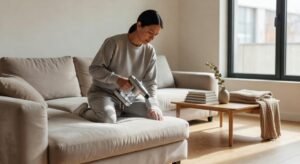
Pet safe carpet deodorizer powder neutralizes odors trapped deep in carpet fibers without putting your dogs or cats at risk. The key difference between safe and unsafe formulas comes down to the ingredient list — genuine pet safety means skipping borax, synthetic fragrances, and essential oils known to harm animals, and leaning on gentle natural odor-absorbers that actually do the job.
Key Findings at a Glance
- Approximately 67% of US households own at least one pet, according to the American Pet Products Association’s National Pet Owners Survey — making pet-related carpet odor one of the most widespread home-cleaning frustrations in the country.
- Pet urine contains uric acid crystals that bond chemically to carpet fibers and reactivate when they encounter humidity, which explains why carpet odors seem to “come back” days after you’ve cleaned.
- Borax, synthetic fragrances, and essential oils including tea tree, eucalyptus, and pennyroyal are identified by veterinary poison control authorities as harmful to cats and dogs — and appear in many popular carpet powders.
- Allowing powder to sit for 15–30 minutes before vacuuming dramatically improves odor absorption compared to a rushed 5-minute application.
- A homemade baking soda formula costs as little as $0.10–$0.30 per use and can rival commercial powders in real-world performance when applied correctly.
What Makes a Carpet Deodorizer Powder Truly Pet Safe?
A carpet deodorizer powder is genuinely pet safe when every ingredient in it is non-toxic to animals at the concentrations used in normal household application. That sounds straightforward, but it means checking each component — not just accepting the marketing claim on the front of the package.
Pet safety has two distinct layers. First, the powder must not release toxic vapors into the room air when it’s applied. Second, it must remain safe if a pet walks across a treated carpet and then licks their paws — because they will. Dogs and cats groom themselves constantly, and any substance contacting their paws can enter their system. Even a product that’s safe to breathe may cause problems if it’s absorbed through repeated paw-licking.
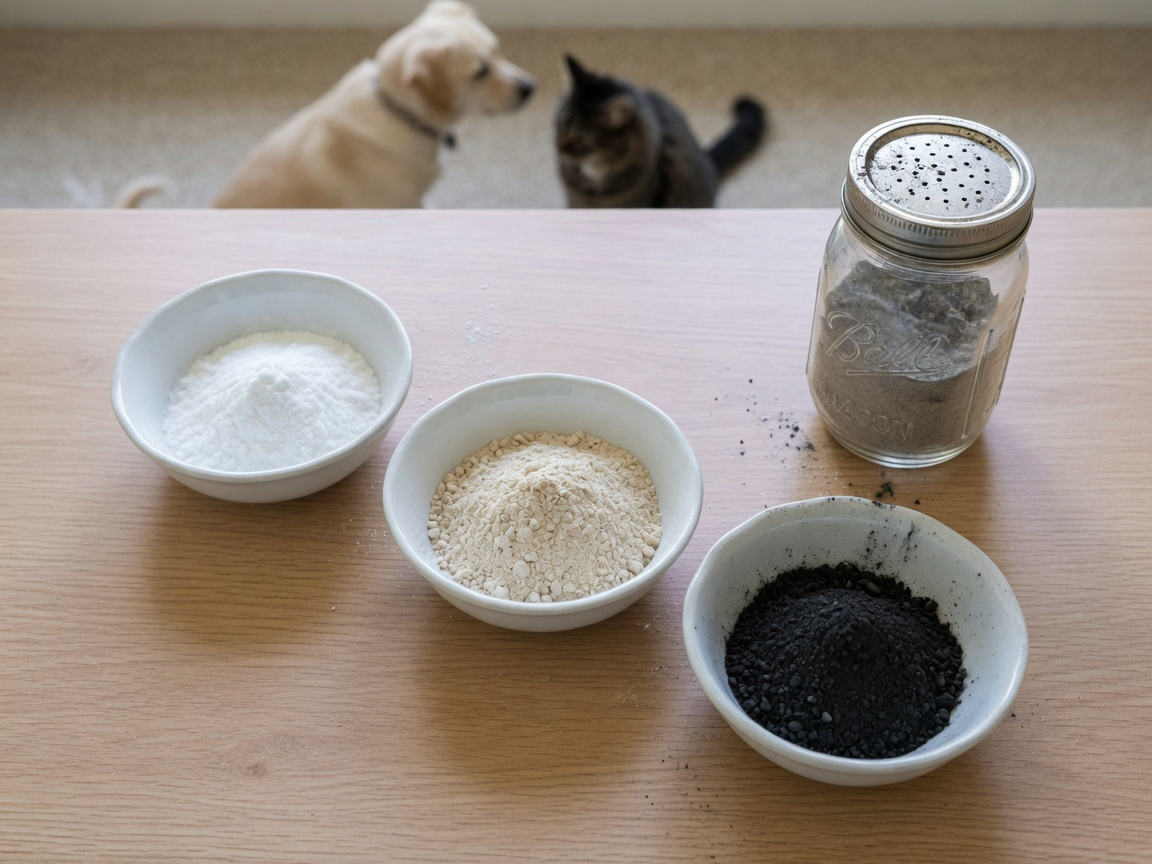
The ASPCA Animal Poison Control Center maintains a continuously updated list of substances known to harm pets. Cross-referencing that list against any carpet product’s ingredient panel is one of the most practical steps a pet owner can take before using anything in the home. The encouraging news: several common, inexpensive natural ingredients — plain baking soda, food-grade diatomaceous earth, and activated charcoal — clear that check with ease.
Ventilation matters too, even with safe formulas. Fine airborne particles of any powder can irritate the airways of cats and small dogs while they’re still settling. The simple habit of keeping pets out of the room for the duration of the application and for 10–15 minutes afterward eliminates this concern almost entirely — no special equipment required.
Why Do Pet Odors Cling to Carpet So Stubbornly?
Pet odors are persistent for a specific chemical reason that most generic deodorizers fail to address: pet urine doesn’t just sit on top of carpet fibers. It soaks through to the backing and the pad beneath, and when the liquid evaporates, it leaves behind uric acid crystals embedded in the fibers.
Uric acid is notoriously stable. Unlike the water, ammonia, and urea components of urine — all of which evaporate or dissolve relatively easily — uric acid forms microscopic crystals that water cannot dissolve and soap-based cleaners cannot break down. Those crystals reactivate every time they absorb moisture, releasing a fresh burst of odor compounds. This is exactly why a carpet that smelled clean last week can suddenly reek after a rainy day or after a steam cleaning session that added humidity to the fibers.
Bacteria compound the problem further. Urine is a nutrient source, and bacteria that colonize a pet accident spot keep producing odor compounds long after the original incident. A deodorizer powder that simply layers fragrance over the smell does nothing to stop that biological process — it just adds a scent on top of it. Within hours or days, the underlying odor reasserts itself.
Research in veterinary behavioral medicine also shows that pets are drawn back to locations where they can still detect their own scent — meaning an incompletely treated accident spot actively encourages repeat accidents. Effective odor elimination isn’t just about your nose; it’s about breaking the behavioral loop too.
Effective pet safe carpet deodorizer powder works differently. It physically absorbs loose odor molecules, neutralizes acidic and alkaline compounds through chemistry, and in some formulas creates an environment that discourages further bacterial activity. That’s a durable solution — which is why dwell time matters so much. The powder needs time in contact with the fibers to do real, lasting work.
Which Ingredients Should You Avoid in Carpet Deodorizer Powder?
This is the single most important question to answer before buying or making any carpet powder for a home with pets. Several standard deodorizer ingredients that appear in popular products are problematic for animals — and labeling isn’t always transparent about the risk.
Borax
Borax (sodium borate) is a common ingredient in DIY carpet-cleaning recipes. It’s effective against odor-causing bacteria, which is why it gets recommended — but it’s also a gastrointestinal irritant in cats and dogs. Ingestion, even in small amounts from routine paw-licking, can cause vomiting, lethargy, and abdominal discomfort. The ASPCA lists borax as a substance of concern for pets. Leave it out of any formula used in an active pet home.
Synthetic Fragrances
The word “fragrance” on an ingredient label can legally conceal dozens of individual chemical compounds that manufacturers aren’t required to disclose individually. Dogs possess olfactory systems estimated by canine research to be 10,000 to 100,000 times more sensitive than a human’s. A fragrance concentration that smells mild to us can be genuinely overwhelming — and potentially irritating to mucous membranes and airways — for dogs and cats. Powders marketed as “fresh-scented” or “spring breeze” are likely fragrance-heavy. Look for products with no fragrance or with specifically identified natural scent sources.
Certain Essential Oils
Not all essential oils carry the same risk, but several popular ones are genuinely dangerous to pets. Tea tree oil (melaleuca) is toxic to both cats and dogs and has been linked to serious neurological symptoms — tremors, loss of coordination, even collapse — in small doses. Eucalyptus, pennyroyal, peppermint, cinnamon, and wintergreen oils are also flagged by veterinary toxicologists as problematic. Cats face a specific additional risk: they lack a liver enzyme (glucuronyl transferase) needed to metabolize many phenolic compounds found in essential oils, making concentrated oil exposure particularly dangerous for them. Some manufacturers use essential oils specifically to support a “natural” positioning — but natural doesn’t mean safe for pets. Always check the full ingredient list.
Talc and Unspecified Mineral Dusts
Some older carpet powder formulas use talc as a carrier agent. Talc is not acutely toxic to pets, but fine respirable mineral particles of any kind can irritate the lungs of cats and small dogs when inhaled in concentration. This is primarily an application-method concern rather than a direct toxicity issue — but it’s worth factoring in when comparing powder ingredients, especially for households with flat-faced (brachycephalic) breeds that already have compromised breathing.
What Natural Ingredients Actually Work in Pet Safe Formulas?
The most effective odor-neutralizing ingredients for carpet are also among the safest for pets. You genuinely don’t have to trade performance for safety here — the natural options work, and they work well.
Baking Soda (Sodium Bicarbonate)
Baking soda is the foundation of virtually every effective, pet-friendly carpet deodorizer formula. As a mild alkali, it neutralizes acidic odor compounds — including the lactic acid and uric acid components of pet urine — through a straightforward pH-balancing reaction. It also physically absorbs loose odor molecules trapped in carpet fibers. The ASPCA considers baking soda non-toxic to pets in the amounts encountered during normal household carpet use. Thorough vacuuming after the dwell period ensures minimal residue remains, keeping even that modest exposure lower still.
Food-Grade Diatomaceous Earth
Food-grade diatomaceous earth (DE) is a fine powder made from fossilized algae. It’s an excellent moisture and odor absorber — it pulls humidity out of carpet fibers while simultaneously trapping odor molecules. At food-grade purity, it’s widely considered safe around pets. The critical distinction: always use food-grade DE, not pool-grade. Pool-grade has a significantly higher crystalline silica content and carries a genuine respiratory risk. Food-grade does not. Apply in a ventilated room and keep pets out during the process, as any fine airborne powder warrants respiratory caution regardless of its toxicity profile.
Activated Charcoal Powder
Activated charcoal is a powerful adsorbent — it traps odor molecules within its highly porous structure rather than simply masking them with scent. In small quantities blended into a carpet powder, it significantly boosts the formula’s odor-capture capacity. Veterinarians routinely use activated charcoal therapeutically to treat accidental poisoning in animals by binding toxins in the gut, which speaks to its fundamental safety profile. In carpet powder formulas it’s non-toxic to pets, though its grey-black color warrants a spot test on light-colored carpet before full application — it should vacuum out cleanly, but it’s worth verifying.
Dried Herb Powders (Pet-Safe Varieties Only)
Certain dried herbs can add a light, pleasant fragrance to a powder formula without the concentrated phenolic risk of essential oils. Dried lavender in small concentrations is generally tolerated well by dogs — though it should be used minimally or omitted entirely in homes with cats, who are more sensitive. Dried chamomile and dried lemon peel powder provide a mild fresh scent at much lower risk than any oil-based alternative. These are optional additions; baking soda alone handles the odor neutralization effectively. But if fragrance matters to you, dried herbs are the right route.
How Do You Use Pet Safe Carpet Deodorizer Powder Step by Step?
The method matters as much as the formula. Even the best ingredients underperform when they’re applied carelessly or vacuumed up before they’ve had time to work. Follow these steps and you’ll get noticeably better results than the typical rushed application.
- Move pets out of the room. Keep dogs and cats out of the treatment area during application and for at least 15 minutes afterward while fine particles settle. This protects their respiratory systems from airborne dust and prevents direct paw contact with undissolved powder.
- Vacuum the carpet first. Remove loose hair, dander, and surface debris before applying powder. Powder applied over a dirty carpet gets diluted by debris and loses direct contact with the fibers where odors actually live.
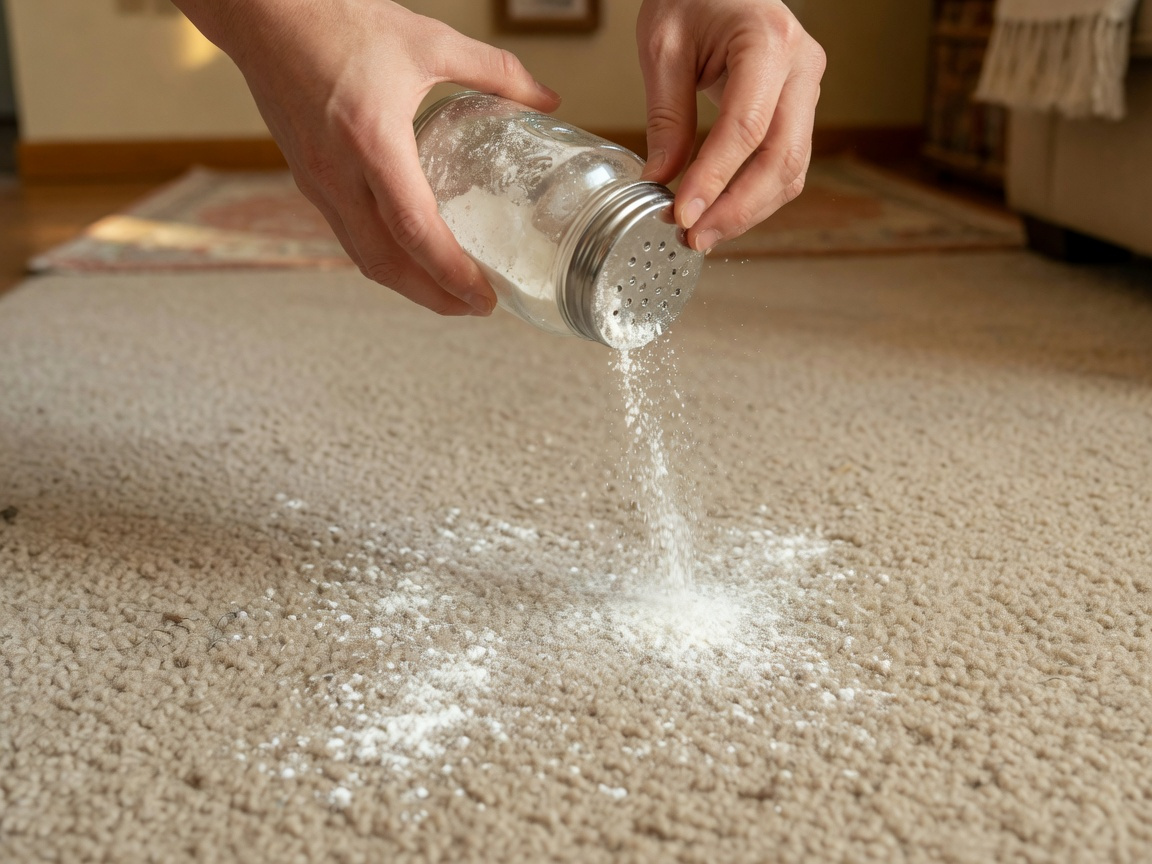
- Sprinkle evenly from a height of 12–18 inches. Sprinkling from too close creates dense, uneven clumps. Releasing powder from a wider height lets it drift down and distribute into the pile more consistently. A mason jar with holes punched in the lid or a dedicated powder shaker both work well.
- Work the powder into the pile with a soft brush. A soft-bristle scrub brush or a clean, dry paintbrush helps powder make contact with fibers deeper in the pile rather than sitting only on the surface. This step alone can noticeably improve results on thicker carpets.
- Allow a dwell time of 15–30 minutes — longer for severe odors. This is the step most people skip in a hurry, and it’s where most of the real odor neutralization happens. For a carpet with entrenched pet urine smell, leaving the powder on overnight (with pets kept out of that room) produces dramatically better results than a short dwell.
- Vacuum slowly and thoroughly. Make multiple slow passes with overlapping paths in different directions. A fast single-pass vacuum leaves significant powder in the pile, which accumulates over time and can affect carpet texture and feel. Empty the vacuum canister or bag immediately afterward to prevent trapped odors from recirculating into the room air.
- Air the room for 10–15 minutes before returning pets. Open a window or run a fan to clear any remaining airborne particles. Once the carpet surface looks clear and the air has settled, the space is safe for your pets.
Can You Make a DIY Pet Safe Carpet Deodorizer Powder at Home?
Absolutely — and in many cases a homemade formula gives you more ingredient control than any commercial product can. Here are two recipes worth keeping in regular rotation, depending on what your carpets are dealing with.
Basic Baking Soda Formula (Best for Everyday Maintenance)
- 2 cups plain baking soda
- Optional: 1 teaspoon dried lavender powder (dogs only — omit for cats)
Stir together in a bowl. If adding lavender, mix thoroughly so the herb is evenly distributed rather than clumped. Transfer to a glass mason jar with a shaker lid — punch several holes in the metal lid with a nail and hammer. Label with the date and contents. Cost per batch: approximately $0.30–$0.50. This formula handles general pet odors and dander smell reliably, and it’s the most conservative option for households with cats or pets with known sensitivities.
Enhanced Odor-Absorbing Formula (Best for Tough or Entrenched Odors)
- 1 cup baking soda
- ½ cup food-grade diatomaceous earth
- ¼ cup activated charcoal powder
- 1 teaspoon dried lavender powder (optional, dogs only)
Mix all dry ingredients together in a bowl — the activated charcoal will turn the mixture grey-black, which is normal. Before using this formula on your main carpet, do a small spot test in a hidden corner to confirm it vacuums out completely on your specific carpet type. It should pull out cleanly, but light-colored or delicate carpets benefit from that extra check. Cost per batch: approximately $1.50–$2.00 depending on where you source the ingredients. Both formulas store well in a sealed glass container for 3–6 months.
How Often Should You Deodorize Carpets in a Multi-Pet Home?
Frequency depends on the number of pets, whether any have indoor accidents, what species they are, and how much time they spend on carpet surfaces. This table gives a practical starting framework:
| Household Type | Recommended Frequency |
|---|---|
| One small dog or cat, no accidents | Every 3–4 weeks |
| Two or more pets, occasional accidents | Every 1–2 weeks |
| Multi-pet home, frequent accidents or older incontinent pet | Weekly, plus spot treatment after each incident |
| High-traffic rooms where pets sleep or play | Weekly, regardless of accident frequency |
Spot-treating immediately after an accident is always more effective than waiting for a scheduled session. When a pet has an accident, blot the liquid first with a clean absorbent cloth — press down, don’t rub — then apply baking soda generously to the damp spot. Allow at least 30 minutes before vacuuming. This captures uric acid compounds before they fully crystallize and bond with carpet fibers, making them far easier to eliminate later. Treated immediately, a urine spot can be fully addressed in a single session. Left for hours or days, the same spot may take multiple treatments to fully resolve.
For homes with puppies in training or elderly dogs with incontinence, weekly whole-carpet powder treatment combined with immediate spot treatment is often the only approach that keeps odors consistently manageable. As veterinary behavioral medicine research indicates, pets are reliably drawn back to locations where they can still detect their own scent — making complete odor elimination a direct component of accident prevention, not just a comfort preference.
Does Pet Safe Carpet Deodorizer Powder Work on All Carpet Types?
Baking soda-based powders are compatible with virtually every carpet type, but a few practical considerations apply based on pile structure and fiber material.
Cut Pile and Plush Carpets
Standard cut pile and plush carpets are the most forgiving surface for powder treatment. The powder works its way into the pile easily, makes good fiber contact during the dwell period, and vacuums out cleanly with a few thorough passes. The main risk with very thick plush is that powder can settle deep into the pile if the vacuum suction is weak — use a vacuum with strong suction and run multiple overlapping passes to ensure complete removal.
Berber and Loop Pile Carpets
Berber and loop pile carpets have tight, flat loops that can trap fine powder particles more stubbornly than open pile structures. Apply lightly, use a soft brush to work powder into the loops with gentle strokes rather than aggressive scrubbing (which can snag and damage the loops), and vacuum carefully with multiple slow passes. The enhanced formula with activated charcoal is slightly harder to remove fully from Berber — stick to the plain baking soda version for loop pile carpets.
Wool Carpets
Wool is generally compatible with baking soda, but wool fiber is moisture-sensitive. Keep applications light and dry, and don’t leave powder on a wool carpet overnight — the extended contact duration can allow trace moisture from the baking soda to affect the fiber. A 15–20 minute dwell time is sufficient for wool. Avoid the enhanced formula on wool; the diatomaceous earth component can work into wool fibers in a way that’s harder to vacuum out completely.
Light-Colored or White Carpets
Plain baking soda and food-grade diatomaceous earth are both white powders that leave no visible residue after thorough vacuuming. If your formula includes activated charcoal, always do a spot test in a hidden area first — the grey-black powder should vacuum out cleanly on most carpet types, but confirm this on your specific carpet before treating a high-visibility area.
How Does Powder Compare to Spray Deodorizers for Pet Homes?
Powder and spray deodorizers solve different problems, and the most effective approach for a pet home usually involves using both — for different situations.
Powder is better for whole-carpet, routine deodorizing. It penetrates into the pile, stays in contact with odor-causing compounds for an extended period, and physically absorbs both moisture and odor molecules. It’s also highly controllable — you see exactly where it’s applied and you can remove it completely by vacuuming. For households with dogs that track in outdoor odors or cats whose litter habits affect the surrounding carpet, regular powder treatment is the most practical maintenance tool available.
Spray deodorizers are better for targeted, immediate applications. A spot that smells between scheduled powder sessions, or a hard floor surface next to the carpet edge, is where a spray excels. Many pet-safe spray formulas use enzymatic action to break down uric acid at a molecular level, making them particularly effective on fresh urine stains. Sprays don’t absorb odors the way powders do — they work chemically, not physically — and they don’t address the embedded hair and dander odors that a dwell-time powder treatment handles well.
The practical conclusion: use pet safe carpet deodorizer powder for scheduled whole-room maintenance on a regular cadence, and keep a pet-safe enzymatic spray on hand for immediate accident response. The two approaches complement each other rather than competing, and together they cover nearly every pet carpet odor scenario a household with dogs or cats is likely to face.
What Signs Tell You a Carpet Product Is Affecting Your Pet?
Even with careful ingredient checking, monitoring your pets after using any carpet product is sound practice. Most reactions to a problematic powder are mild and resolve quickly once the pet is moved to fresh air — but knowing what to watch for means you catch anything more serious before it escalates.
Respiratory Signs
Sneezing, coughing, or labored breathing after carpet powder application indicates respiratory irritation — either from fine particulates that didn’t fully settle, or from a fragrance compound. Remove the pet from the room immediately and provide fresh air. If symptoms don’t resolve within a few minutes of fresh air exposure, contact your veterinarian. Cats are especially sensitive to airborne irritants due to their smaller airway volume relative to body size.
Paw and Skin Irritation
Compulsive licking of paws, pawing at the muzzle or eyes, or visible redness between the toes after carpet contact can indicate irritation from powder residue. Rinse the paws with warm water and monitor for improvement. If licking is persistent or the skin appears inflamed after rinsing, call your vet.
Gastrointestinal Signs
Vomiting, excessive drooling, or loss of appetite within a few hours of carpet treatment can suggest that a problematic ingredient was ingested through paw-grooming. This is the scenario where borax causes the most concern — and it’s the clearest argument for leaving borax out of any formula used in a pet home. Contact your veterinarian and bring the product’s ingredient list with you.
Neurological Signs (Rare but Urgent)
Tremors, loss of coordination, disorientation, or collapse after carpet treatment are rare but constitute a veterinary emergency. This presentation is associated specifically with concentrated essential oil exposure — particularly tea tree or pennyroyal. Do not wait to see if symptoms improve on their own. Call an emergency veterinary clinic immediately and bring the product or its ingredient list. Veterinary toxicologists at the ASPCA Animal Poison Control Center are available 24 hours a day at 888-426-4435 and can advise on specific ingredients in real time — their number is worth keeping in your phone contacts if you use any cleaning product around pets.
Frequently Asked Questions About Pet Safe Carpet Deodorizer Powder
Is baking soda truly safe to use around dogs and cats?
Yes. For normal household carpet use, the ASPCA considers baking soda non-toxic to pets. The trace amount that might reach a pet from briefly contacting a vacuumed carpet is not enough to cause harm. The only scenario of concern is direct ingestion of a large quantity — which is why keeping pets out during application and vacuuming thoroughly afterward matters. Once the carpet is vacuumed and aired, residual exposure is negligible.
Can I use any essential oil in my homemade carpet deodorizer if I have pets?
No — and this is one of the most important safety points in this entire guide. Many essential oils that smell pleasant and are marketed as natural are genuinely toxic to cats and dogs. Tea tree, eucalyptus, pennyroyal, peppermint, cinnamon, and wintergreen oils are all problematic. Cats face particular risk because they lack the liver enzyme needed to metabolize many oil compounds. If you want fragrance in your formula, use dried herb powders — they provide a gentler scent at a fraction of the risk of concentrated oil.
How long should I keep pets off the carpet after applying deodorizer powder?
Plan for roughly one hour of total restricted access: the application itself, the dwell period (at least 15–30 minutes), the vacuuming process, and 10–15 minutes for particles to settle and the room to air out afterward. For overnight applications, keep pets out of that room until morning vacuuming and airing are complete. The extra few minutes of patience here are the most cost-effective safety measure in the whole process.
Will carpet deodorizer powder permanently eliminate pet odors?
Powder is highly effective at removing surface and mid-pile odors, but it won’t reach odors that have soaked through the carpet backing and into the padding or subfloor. For those deeply embedded smells — typically from repeated accidents in the same spot — a wet enzymatic cleaner is needed to reach and break down the uric acid crystals at depth. The most effective approach is powder for regular maintenance and prevention, enzymatic spray for active stains and entrenched problem areas. Together, they address the full spectrum of pet carpet odors.
Is food-grade diatomaceous earth safe for pets?
Food-grade diatomaceous earth is widely considered non-toxic to pets in normal household use. The critical distinction is food-grade versus pool-grade — pool-grade has a higher crystalline silica content that poses respiratory risk. Stick to food-grade only. Keep pets out of the room during application since fine airborne particles can irritate airways momentarily as they settle. Once the powder is in the carpet and you’ve moved to the vacuuming phase, ongoing risk is effectively zero.
Can I use carpet deodorizer powder on pet bedding?
Yes, with a more cautious approach than carpet use. Apply plain baking soda lightly to dry bedding, allow 15–20 minutes, then take the bedding outside and shake it out thoroughly before returning it to the home. Avoid formulas with activated charcoal or diatomaceous earth on fabric bedding — these are harder to remove completely without a full wash cycle, and pet bedding has direct prolonged contact with your animal’s skin. For regular bedding freshness, a light baking soda treatment between washes works well. A full hot-water wash cycle remains the gold standard for odor removal from pet bedding.
The Bottom Line on Pet Safe Carpet Deodorizer Powder
Keeping carpets genuinely fresh in a home with pets is achievable without compromising your animals’ safety — and it doesn’t require expensive products or complicated routines. Choose ingredients your pets can safely contact (baking soda, food-grade diatomaceous earth, activated charcoal), avoid the problematic ones (borax, synthetic fragrances, essential oils), apply using the step-by-step method above with adequate dwell time, vacuum thoroughly, and make it a recurring habit rather than an occasional emergency measure.
The DIY route gives you complete ingredient transparency at minimal cost — a basic baking soda formula runs pennies per application and performs at a level that rivals many commercial products. If you prefer to buy a ready-made powder, the ingredient-checking habit you’ve developed from this guide will help you identify products that genuinely live up to the “pet safe” label rather than just carrying the marketing language.
Your action plan for this week:
- Check the ingredient list on any carpet powder you currently use against the avoid list in this guide.
- Make a basic baking soda formula today — it takes two minutes and you likely have everything you need on hand already.
- Treat your highest-traffic carpet area using the 7-step method above with a minimum 30-minute dwell time.
- Set a recurring calendar reminder to repeat the process every 2–3 weeks for consistent, cumulative results.
- Save the ASPCA Animal Poison Control Center number — 888-426-4435 — in your phone contacts. It’s free to use and available 24 hours a day.