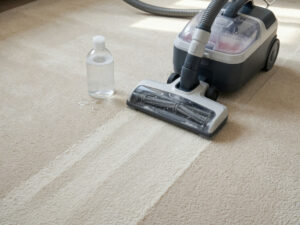
A pet carpet cleaner spray is a ready-to-use formula you apply directly to a stain, let dwell, then blot away. The best ones use enzyme cultures to break down uric acid and proteins deep in the carpet pile — addressing the actual source of the smell rather than masking it on the surface. Get that right and you stop the cycle of stains that seem to vanish, then return every time the carpet warms up.
Quick summary: The right pet carpet cleaner spray, used correctly, removes both the visible stain and the odour compounds underneath it. The two most common reasons a spray fails are insufficient dwell time and using the wrong formula for the type of mess — both easy to fix once you understand what you’re dealing with.
- Enzymatic formulas are designed to target uric acid at source — the primary compound behind persistent pet urine odour.
- Dwell time matters more than scrubbing: most sprays need several minutes of contact before you blot.
- Carpet type affects which spray is safe to use — a spot test in a hidden area is always worth the extra two minutes.
- A fresh stain is significantly easier to treat than one that has dried and bonded to carpet fibres.
What Exactly Is a Pet Carpet Cleaner Spray?
A pet carpet cleaner spray is a ready-mixed cleaning product in a trigger-spray bottle, formulated specifically for the organic waste that pets leave on carpets — urine, faeces, vomit, and similar accidents. What sets it apart from a general stain remover is its focus on biological matter. Standard carpet cleaners work well on spilled drinks or food because those stains are relatively simple compounds to lift with detergent and water. Pet accidents are a different challenge. They contain proteins, fats, urea, and uric acid — and it’s that final compound that causes the persistent odour problem standard cleaners consistently fail to solve.
Uric acid forms crystals that bond tightly to carpet fibres. When a carpet dries, those crystals go largely dormant — they don’t produce much smell in cool, dry conditions. But when warmth or humidity returns (a sunny afternoon, a pet lying back on the same spot, or even a steam cleaner applied over the area), the crystals reactivate and the odour resurfaces — often stronger than before. A pet carpet cleaner spray that doesn’t address uric acid will only ever give you a temporary result. This is why a product’s formulation matters far more than how quickly it lifts surface discolouration or how strong it smells in the bottle. The most effective sprays target what’s causing the problem underneath the surface, not just what’s visible on top.

How Does a Pet Carpet Cleaner Spray Actually Work?
Most pet carpet cleaner sprays work through one of two mechanisms: enzymatic breakdown or oxidative cleaning. Enzymatic sprays contain live enzyme cultures — typically proteases, lipases, and urinases — that catalyse the breakdown of organic molecules. When you apply an enzymatic formula to a stain, these enzymes dismantle the proteins, fats, and uric acid crystals that make up pet waste. The process requires contact time, moisture, and a working temperature at which the enzymes remain active (generally normal room temperature). This is why many enzymatic products recommend keeping the treated area moist during the dwell period — often by covering it with a damp cloth. Without that moisture, the enzymes can dry out and stop working before they’ve finished the job.
Oxidative sprays work differently. They typically use hydrogen peroxide or sodium percarbonate to release oxygen, which breaks the molecular bonds holding stain pigments together. This can be fast and effective for visible surface stains and neutralises some odour-causing molecules. However, oxidative formulas are generally less targeted at uric acid than enzymatic ones — they may lift the visible stain while leaving enough odour residue for the smell to return. Some premium sprays combine both approaches, pairing an enzymatic base for deep odour removal with an oxidiser for faster surface action. For urine odour specifically, enzymatic formulas remain the more targeted choice. You can see how the leading products in that category compare in this guide to the best enzymatic carpet cleaner for pet messes.
What Ingredients Should You Look for in a Pet Carpet Cleaner Spray?
Reading the ingredient label of a pet carpet cleaner spray is more informative than most people realise. Protease enzymes break down protein chains — the structural backbone of biological waste. Urease and uricase specifically target urea and uric acid, which are the primary odour compounds in pet urine. Some products list “enzyme-producing bacterial cultures” rather than isolated enzymes; these cultures continuously generate fresh enzymes over an extended period, which can be advantageous for deep or set-in stains where a single application may not fully penetrate. If a product lists enzymes without specifying the type, it is worth checking with the manufacturer whether urinase or uricase is included — these are the most relevant for urine odour.
Beyond enzymes, surfactants play an important supporting role. These detergent-like compounds reduce the surface tension of the formula and help it penetrate carpet fibres rather than pooling on the surface. A well-designed surfactant system also helps lift the stain mechanically once enzymatic action has broken down the organic matter. Odour neutralisers — compounds that chemically alter odour molecules rather than simply covering them — are another positive signal in an ingredient list. By contrast, heavy fragrance is a red flag: a strong scent can make a spray feel like it’s working when it’s only masking the odour temporarily. If hydrogen peroxide appears on the label, the product may be effective for colour lifting but should be spot-tested first on any carpet where colourfastness is uncertain, as oxidising agents can bleach some carpet dyes.
Enzymatic vs. Non-Enzymatic Sprays: Which One Should You Choose?
The choice between enzymatic and non-enzymatic pet carpet cleaner spray comes down to what you’re trying to solve. For urine odour — especially the kind that keeps returning after cleaning — enzymatic is the more targeted choice, because only enzymes can break down the uric acid crystals responsible for that persistent smell. For visible surface staining without a significant odour component (such as a small amount of vomit on a recently cleaned carpet), a non-enzymatic oxidising spray may work quickly and effectively. Here is how the two categories compare across the factors that matter most:
| Feature | Enzymatic Sprays | Oxidising (Non-Enzymatic) Sprays |
|---|---|---|
| Best for | Urine odour, protein-based stains | Surface stains, colour lifting |
| Active ingredient | Live enzyme cultures (protease, urease, uricase) | Hydrogen peroxide, sodium percarbonate |
| Dwell time required | Longer — typically 10 minutes or more per label | Shorter in many cases |
| Old or set-in stains | Effective with patience; repeat applications help | Less effective on entrenched odour |
| Carpet safety | Generally safe once dry; spot test recommended | Risk of bleaching on certain carpet dyes |
| Odour elimination | Targets uric acid at source | Oxidises odour molecules; may not fully eliminate |
If urine is your primary challenge — especially in households with multiple pets or where accidents tend to happen in the same areas — an enzymatic formula is the more reliable long-term choice. For households managing recurring urine across multiple rooms, our full roundup of the best carpet cleaners for pet urine covers both spray and machine options for different levels of soiling.
How Do You Use a Pet Carpet Cleaner Spray — Step by Step?
Most pet carpet cleaner sprays underperform because of how they’re applied, not because of what’s in them. Not allowing enough dwell time and scrubbing rather than blotting are the two errors that consistently undermine a good product. A reliable method makes a real difference to the result, regardless of which formula you’re using.
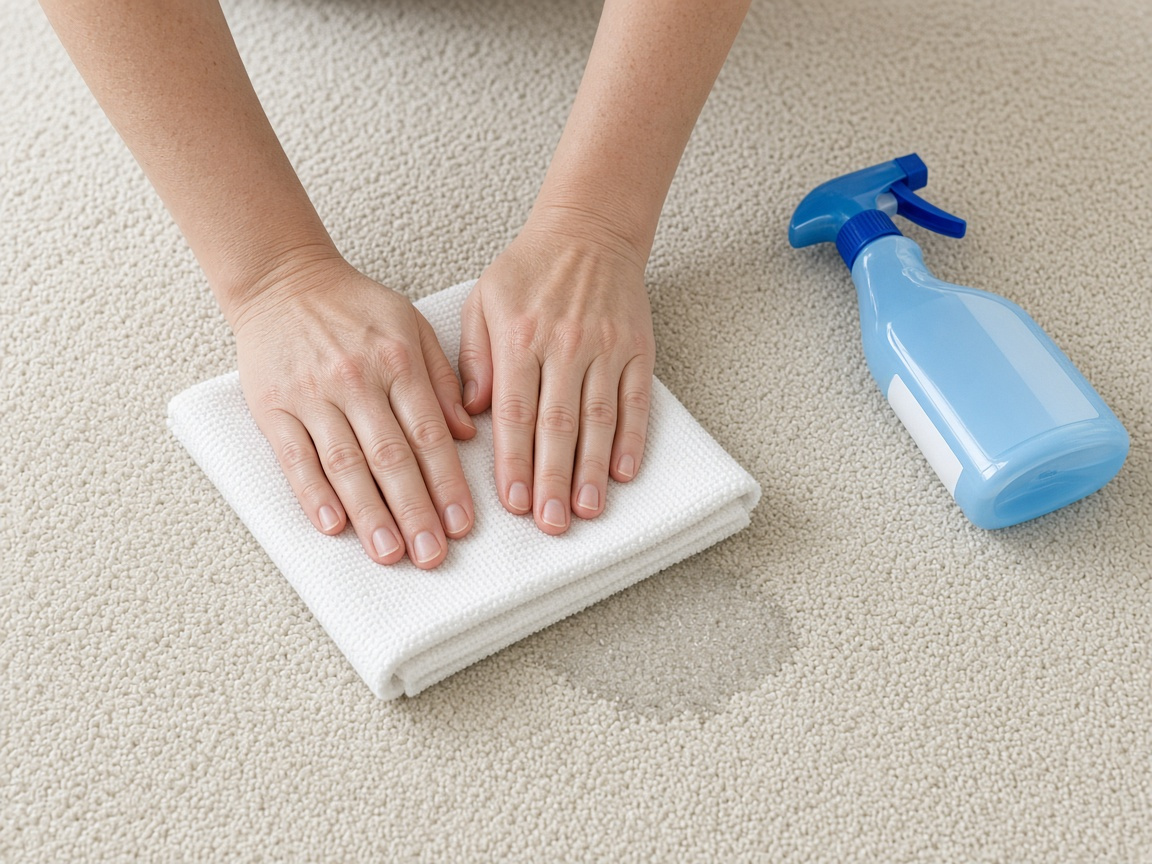
- Act as quickly as possible. For a fresh accident, blot up as much liquid as you can using a clean white cloth or several layers of kitchen paper. Press firmly — don’t rub — working from the outside of the stain inward to avoid spreading it.
- Spot test before treating a visible area. Apply a small amount of spray to a hidden section of carpet (under furniture works well), wait five minutes, then blot. If carpet colour transfers to the cloth or the pile texture changes, choose a different formula.
- Apply the spray generously. You want the formula to penetrate through the carpet pile and into the backing — not just wet the surface fibres. Apply enough to saturate the stained area fully.
- Cover and allow to dwell. For enzymatic sprays especially, cover the area with a damp cloth or plastic sheeting to keep it moist throughout the dwell period. Follow the time stated on the product label. Skipping or shortening this step is the single most common reason results disappoint.
- Blot — don’t scrub. After the dwell time is up, blot firmly with a clean dry cloth, working from the outside inward. Scrubbing spreads the stain and damages carpet fibres.
- Repeat for stubborn stains. Old or heavily saturated stains often need a second or third application. Allow the carpet to dry fully between each treatment.
- Keep pets away until the area is completely dry. A pet walking on a treated area before it dries can transfer residue and may reactivate the compounds you’ve just broken down.
Illustrative scenario: You spot a wet patch on the carpet in the evening, give it a quick spray, blot after a couple of minutes, and consider the job done. The next morning the carpet looks fine. Two weeks later, after a warm afternoon, the smell returns — stronger than before. The spray didn’t fail; it simply wasn’t given enough dwell time to complete the enzymatic process. The same product, left for the time specified on the label, would likely have resolved the issue in that first treatment.
For stains that have soaked deep into the pile, using a spray with an integrated brush can help work the formula into the fibres more effectively than a cloth alone. Our guide to choosing a pet carpet cleaner spray with a brush attachment covers what to look for in that specific format.
Which Types of Pet Mess Can a Spray Actually Tackle?
Pet carpet cleaner sprays are built around organic waste, and their effectiveness varies depending on what you’re cleaning up. Urine is the most common use case, and also the one where enzymatic formulas earn their reputation. The combination of urea, uric acid, and ammonia in pet urine creates a chemically complex stain that genuinely benefits from targeted enzymatic action. Fresh urine is significantly easier to treat than dried or set-in urine, where crystals have had time to bond firmly to fibres. For old urine stains, multiple applications and extended dwell times are typically needed, and the result may not be complete with spray alone.
Faeces requires physical removal first — using a bag or paper towel — before any spray is applied. Once the solid matter is gone, the residual stain and odour respond well to enzymatic treatment. Vomit contains stomach acid combined with partially digested food, so a formula with both protease (for protein) and lipase (for fat) is the most appropriate match. Mud and tracked-in dirt, perhaps counterintuitively, are often better left to dry before you clean — attempting to treat wet mud tends to drive it deeper into the pile. Allow it to dry, vacuum up the bulk, and then use a spray to address any remaining surface staining. For a detailed breakdown of how different pet stain types behave and what each one requires, the guide to pet stain carpet cleaner solutions that tackle everything goes through each category in depth.
Is Pet Carpet Cleaner Spray Safe for Your Pets and Family?
Safety is a reasonable concern when you’re applying a cleaning formula in a space where pets and children spend time on the floor. Most pet carpet cleaner sprays are formulated to be safe for pets and children once the treated area is completely dry. That phrase — “once dry” — is the critical qualifier. During application and the dwell period, treat the product as you would any cleaning chemical: keep pets and children away from the area until it has dried fully. Enzymatic formulas are generally considered lower-risk than oxidative formulas because their active ingredients are biological in nature and break down into benign compounds once the enzymatic process is complete.
That said, not all sprays are equal. Some “natural” pet spray formulas include essential oils — tea tree, eucalyptus, or pennyroyal — that are toxic to cats and potentially harmful to dogs at certain concentrations. If you have cats, scrutinise the full ingredient list and avoid any product that does not explicitly state it is safe for feline households. Alcohol-based formulas present a different concern: if a pet licks a treated area before it has dried, alcohol ingestion is a risk worth taking seriously. For households where pets with known sensitivities are present — or where young children spend significant time on the floor — comparing products against a detailed safety checklist before buying is worthwhile. Our review of pet-safe carpet cleaner solutions examines which formulation categories carry the lowest risk profile for common household pets.
Watch out: Tea tree oil and eucalyptus oil appear in many products marketed as “natural” or “plant-based” cleaners — but both are toxic to cats and can be harmful to dogs. Always read the full ingredient list, not just the front-label claims.
How Do You Match a Spray to Your Carpet Type?
Not every pet carpet cleaner spray is suitable for every carpet. The fibre type, pile construction, and any specialist treatments applied to the carpet all affect which formulas are appropriate. Synthetic carpets — nylon, polyester, and polypropylene — are the most forgiving. They handle most pet spray formulas without issue, and both enzymatic and oxidative sprays are generally compatible, though a spot test in a hidden area remains good practice with any new product on any carpet type.
Natural fibre carpets require considerably more care. Wool is particularly sensitive: it can shrink or felt when over-wetted, and it reacts badly to high-pH alkaline formulas or aggressive oxidisers. For wool carpets, use only products explicitly labelled as wool-safe, apply them sparingly, and ensure the carpet dries quickly to prevent moisture damage. Sisal, jute, and seagrass carpets are even more vulnerable to water-related damage and are generally not suited to wet spray treatment at all — professional dry cleaning is the appropriate approach for those materials. Loop-pile and Berber carpets call for particular caution during application: avoid stiff brushes and vigorous scrubbing, which can snag and distort the loops. Use a soft cloth for blotting and keep spray applications targeted to the stained area only. When in doubt, the carpet manufacturer’s care label and customer helpline are the most reliable source of guidance — especially for expensive or specialist flooring where a mistake could be costly.
What Mistakes Do People Make with Pet Carpet Cleaner Sprays?
A significant proportion of cases where a pet carpet cleaner spray “didn’t work” trace back to application errors rather than product failures. The most common is not allowing sufficient dwell time. Many people spray, wait a minute or two, and immediately begin blotting — but enzymatic formulas need genuine contact time to complete the molecular breakdown of uric acid and proteins. Rushing the process means removing the product before it has finished the job. The dwell time printed on the label is there for a reason: respect it and the product has a genuine chance to work; ignore it and disappointment is the likely result.
Rubbing instead of blotting is the second most common error. Rubbing spreads the stain laterally and drives it deeper into the carpet backing and underlay — the opposite of what you want. A firm blotting motion with a clean, dry cloth removes the broken-down material without spreading it. Using too little product is another frequent problem: you need enough spray to saturate through to where the stain actually is, not just to wet the surface fibres. At the other extreme, applying a steam cleaner before an enzymatic spray can set protein-based stains by denaturing proteins and making them harder to remove — use the enzymatic spray first, then follow with a steam cleaner if needed. Finally, layering a different cleaning product on top of one that is already in the carpet often creates chemical conflicts that reduce the effectiveness of both formulas — rinse and dry the area fully between applications if you are switching products.
When Is a Spray Not Enough — and What Should You Do Instead?
A spray treats the surface and mid-pile of a carpet. There are situations where contamination has gone beyond what any spray can reach from above — and recognising that threshold early saves considerable time and effort. If a pet has been urinating repeatedly in the same spot over weeks or months, the urine has almost certainly penetrated through the carpet, through the underlay, and potentially into the subfloor. No spray — however well formulated — can address contamination at that depth. In those cases, the carpet and underlay typically need to be lifted, the subfloor treated directly, and new underlay fitted before the carpet is relaid.
For large-area accidents or heavy soiling across a wider zone, a portable carpet cleaning machine with an enzymatic cleaning solution offers more thorough extraction than a spray and blotting cloth — the machine’s suction removes broken-down residue more completely than hand blotting can achieve. Old stains that have been treated incorrectly multiple times — especially those that have been steamed or scrubbed repeatedly — may also be beyond what a spray alone can reverse. Professional hot water extraction with an enzyme pre-treatment is the appropriate next step in those situations. That said, a quality spray remains the right first response for the vast majority of everyday pet accidents. Escalation to machines or professionals is warranted only when contamination is deep, repeated, or has been handled incorrectly over a significant period. Our guide to carpet cleaning safety for pet owners is a useful reference for understanding when professional cleaning fits into the picture and what to ask before you book.
Frequently Asked Questions About Pet Carpet Cleaner Spray
How long should I leave pet carpet cleaner spray on before blotting?
This depends on the formula. Enzymatic sprays generally require a minimum of ten minutes of contact time, and many perform better with longer dwell periods — particularly on old or set-in stains. Always follow the specific product label, as dwell time recommendations vary considerably between brands. For enzymatic formulas, keeping the treated area moist by covering it with a damp cloth during the dwell period helps the enzymes stay active for longer and improves the result.
Can I use a pet carpet cleaner spray on old, dried stains?
Yes, but expect the process to take more effort. Dried uric acid crystals are firmly bonded to carpet fibres, and a single application is unlikely to fully resolve a long-standing stain. Apply a generous amount of enzymatic spray, keep the area covered and moist, and allow an extended dwell time. Multiple applications over consecutive days can gradually break down entrenched residue. If odour persists after several attempts, the stain has likely reached the underlay — at that point, a carpet cleaning machine is a more effective tool than a spray alone.
Is pet carpet cleaner spray safe to use on wool carpets?
Not all sprays are. Wool fibres are sensitive to high-pH alkaline formulas and can shrink or felt if over-wetted. Always use a product explicitly labelled as wool-safe, apply it sparingly, and ensure the carpet dries quickly after treatment. For expensive or irreplaceable wool rugs, contacting the carpet manufacturer or a professional carpet cleaner before applying any product is the safest approach.
Why does the pet smell come back after I have used a spray?
This almost always points to uric acid crystals that were not fully broken down during cleaning. Those crystals go dormant when the carpet is cool and dry — making it smell clean — but reactivate when warmth or moisture returns. The fix is an enzymatic formula applied with sufficient dwell time to fully dissolve the crystals, rather than a formula that only masks the odour with fragrance or lifts surface residue without addressing the underlying cause.
What is the difference between a pet carpet cleaner spray and a regular stain remover?
A regular stain remover is designed for non-organic stains — food, drink, mud — and uses detergents or oxidisers to lift surface pigment and contamination. A pet carpet cleaner spray is specifically formulated for the biological compounds in pet waste, particularly the proteins and uric acid that drive persistent odour. A regular stain remover may clear the visible mark but will not address the odour-causing residue underneath, which is why the smell returns.
Can I use a pet carpet cleaner spray in a carpet cleaning machine?
Some pet carpet cleaner sprays are compatible with carpet cleaning machines, but many are not. Using a trigger-spray formula in a machine can generate excessive foam, leave residue in the tank, or damage seals. If you want to use an enzymatic cleaner in a machine, look specifically for a product labelled for machine use. Many enzymatic cleaning ranges offer both spray and machine-compatible formats — they are not always interchangeable, even within the same brand.
Your Next Steps: Getting the Most from a Pet Carpet Cleaner Spray
The right pet carpet cleaner spray, used correctly, handles the vast majority of everyday pet accidents effectively. Matching the formula to the problem is the first step: enzymatic for urine and any protein-based odour, oxidising for straightforward surface colour staining, and a spot test for any carpet you have not treated before. Application technique matters as much as the product you choose — blot rather than rub, give the formula its proper dwell time, and apply enough to reach where the stain actually is rather than just wetting the surface of the pile.
Here is a simple sequence to follow the next time you are facing a pet accident:
- Immediately: Blot up as much liquid as possible with a clean cloth — do not rub.
- Within minutes: Apply your enzymatic spray generously and cover the area to retain moisture.
- After the full dwell period: Blot firmly with a dry cloth, working from the outside inward.
- Once dry: Check the result. If any odour remains, apply a second treatment.
- For recurring or deep stains: Assess whether the contamination has reached the underlay — if so, escalate to a carpet cleaning machine or professional treatment.
Useful tools to keep alongside your spray:
- Clean white microfibre cloths — white so you can see what you are lifting; microfibre for effective blotting without fibre damage
- Damp cloth or plastic sheeting — for covering the treated area during the enzymatic dwell period
- UV black light torch — pet urine fluoresces under UV, making it far easier to locate old or hidden stains not visible under normal light
- Portable carpet cleaning machine — for large-area accidents, or when a stain has saturated through to the backing and blotting alone is not extracting enough residue
Looking ahead through 2026 and into 2027, the pet cleaning market is moving towards more concentrated, refillable, and plant-derived enzymatic formulations. Refillable bottle formats that reduce single-use plastic, and improved enzyme encapsulation technology that extends shelf life in the bottle, are both trends already visible in the product landscape. The overall direction is towards formulas that are more effective over longer storage periods and gentler in terms of environmental footprint — with enzyme technology remaining at the core of what makes the category work.
Bottom line: For most pet accidents, a quality enzymatic spray — applied generously, covered, left to dwell for the time stated on the label, and blotted rather than scrubbed — is the right first response. Keep one accessible near your most accident-prone rooms. When the situation calls for more, the bestcarpetcleanerforpets.com editorial team has in-depth comparisons across the full range of pet carpet cleaning options.